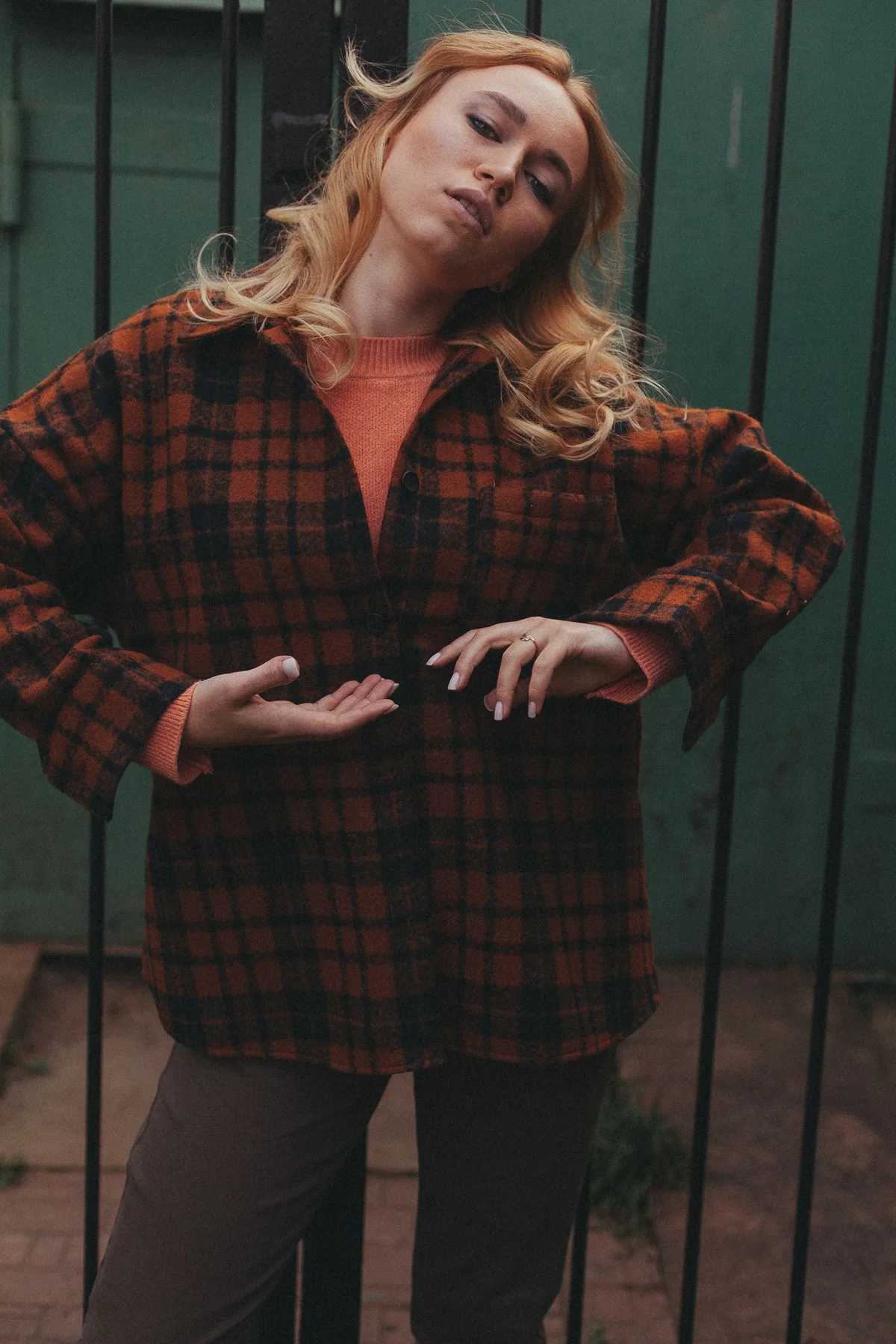
Overshirt pockets sit on a garment that may be worn open, closed or under another layer. Their placement can affect how you use the piece as well as how it looks. Check the actual pockets through the outfit and ordinary movements you expect, rather than assuming every overshirt provides the same kind of useful storage.
Identify the pockets' intended role
Look at the garment's construction and product information. Some pockets are decorative or limited in practical use, and others have closures or features that need to be understood. Do not assume a visible flap means there is suitable space for a phone or another everyday object.
The petite capsule wardrobe guide helps connect the overshirt to actual routines. Ask whether you need its pockets for anything at all, or whether you simply enjoy the garment as a layer over clothes you already wear.
Try the garment with the intended base
Wear the top and lower garment you expect to use beneath it. Check where the pockets sit relative to your comfortable reach and the shirt's fastening. A pocket can appear well placed in a photograph while feeling awkward for the person who will wear it.
If trial use is permitted, assess only suitable ordinary contents within the product's intended use. Avoid loading a pocket to force the shape to change or treating it as secure storage without evidence. Keep important belongings in an appropriate arrangement based on their own requirements and your circumstances.
Look at open and closed positions
Notice how the pockets move when the overshirt is worn open, if that is part of the plan. Check that closures or flaps do not interfere with an underlayer or bag strap. The garment's useful position is the one you actually wear, not the one that keeps a pocket neatly aligned in a static view.
The petite everyday bag guide offers a related way to assess carrying arrangements. A suitable bag may be the better home for an object than a pocket that distorts the shirt or remains difficult to reach.
Include the seated outfit
Sit and reach in a suitable space while wearing the intended combination. Consider any outer layer that will sit over the overshirt. If the pocket area repeatedly catches or feels crowded, identify the exact relationship before deciding the entire garment is unsuitable.
Read the care label before purchase and consider whether pocket details add requirements you are willing to manage. For an existing piece, record a comfortable combination and the objects, if any, you actually keep in it. An overshirt does not need to carry everything to be useful. Its pockets should support the way you wear the garment without introducing a daily adjustment that makes the whole outfit harder to repeat.