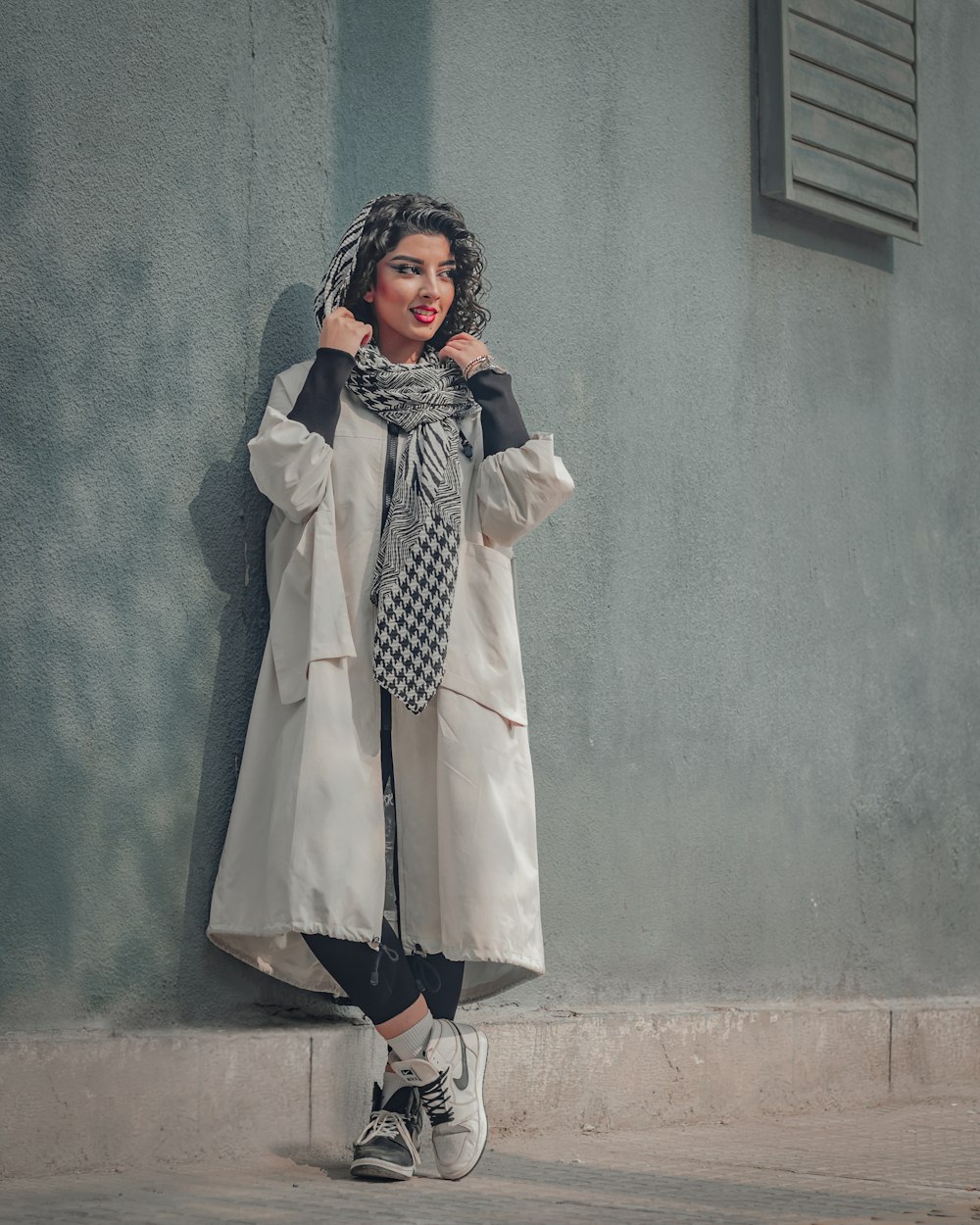
A scarf can show a different part of its pattern depending on the ordinary arrangement you choose. A border may sit near the face while the centre is mostly hidden, or a broad field may become the main visible texture. Look at those actual sections before adding another neckline detail. The decision is about the scarf in this outfit, not a rule that every pattern must be displayed in full.
Look at the scarf as a whole first
Use the scarf appropriately and notice the main areas: border, centre, repeated marks and any quieter space. Keep the product's actual handling requirements clear. A visual comparison does not supply a suitable folding or care method for an unfamiliar material.
Identify which part first drew your attention. If you chose the scarf for a small edge detail, it is useful to know whether that detail appears in the version you plan to wear. If you mainly enjoy the overall texture, a partial view may already give you what you wanted.
Try the intended ordinary arrangement
Put the scarf with the top and coat you actually expect to use, following an appropriate familiar method. Look at the section nearest the neckline and the ends that remain visible. Do not force a tight or complicated arrangement merely to expose a particular mark.
Compare a modest alternative only if the product and your intended use support it. Keep the rest of the outfit constant so that you can see what changed. A different visible strip of the same scarf can alter the group's colour emphasis without introducing another object.
Include the coat's changed versions
Look with the coat open and in its intended fastened arrangement. The unfastened-coat scarf guide considers one of those views. A border that is clear outdoors may be partly hidden when another layer is added or removed.
You do not need the same balance in every version, but the scarf should remain manageable and comfortable through ordinary use. If the pattern only looks appealing in a pose that cannot be maintained, choose another arrangement rather than treating the photograph as the finished outfit.
Decide what other detail is actually needed
Try any intended necklace or collar through the actual neckline. A visible scarf pattern may already provide enough interest for you, or you may enjoy the added relationship. Remove one optional element before assuming the group needs a new matching accessory.
The polo-collar preference guide helps keep a collar decision personal rather than governed by a formula. The scarf can be considered through the same ordinary preference: which part you want to see and how it feels within the clothes you wear.
Keep a brief private reference if the comparison helps repeat the combination. Name the actual scarf and coat rather than only the dominant colours. The useful result is an understood visible section and a manageable outfit. The rest of the pattern can remain folded away without being wasted or needing another occasion to prove its value.