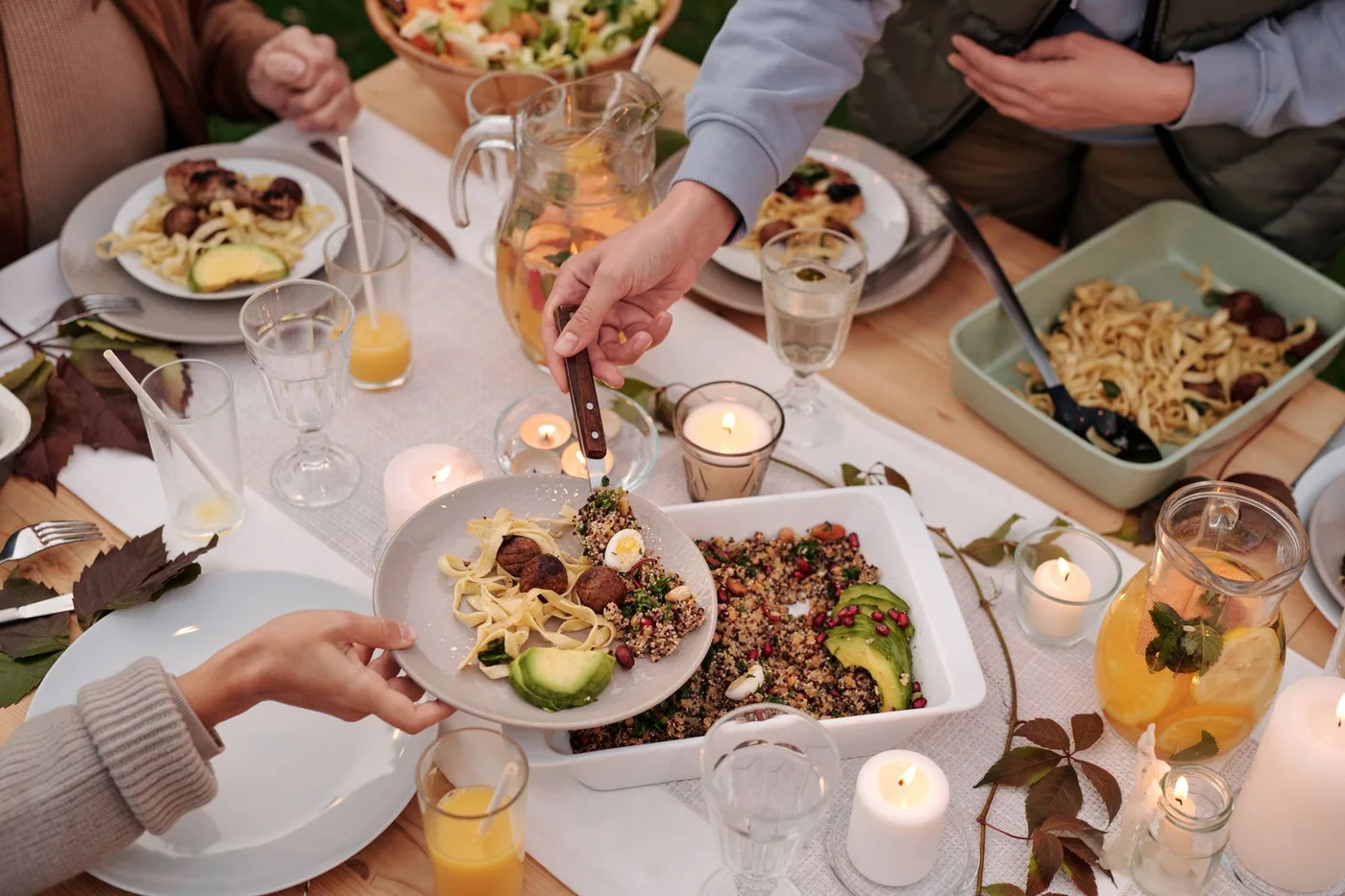
A shared table needs room for people to use their places and take part in the gathering. Decorative items, serving pieces and personal belongings can gradually occupy the space intended for ordinary movement. Choose the setting through the real meal and guests, then leave enough practical room for the occasion to unfold without constant rearranging.
Begin with the actual places
Decide how the table will be used and follow the furniture's stated requirements. Ask about individual needs rather than assuming every guest can manage the same arrangement. A place should be understandable and usable, not merely one more chair squeezed into a photograph.
The easy weekend hosting guide helps connect the setting to a manageable occasion. Choose the meal and serving arrangement through the kitchen and attention actually available rather than adding objects to create an impression of abundance.
Give each object a purpose
Set out suitable tableware and the items needed for the agreed meal. Follow the products' care and intended-use information. A decorative vessel should not become food equipment without reliable information, and a covering should not be assumed to protect the table from every hot or wet object.
Consider where serving items will stand and how they will be passed or used. Avoid a tall or crowded arrangement that requires people to move several objects before reaching their own place. A quieter setting can still feel personal through the details the host and guests actually enjoy.
Keep conversation comfortable
Look at the table from the seated positions and ask whether the arrangement feels manageable. Do not make a universal rule about a centrepiece's height; the useful question is how the actual people can see, hear and interact in the room. Remove or reposition an unnecessary object where appropriate.
The small gathering living-room guide offers related questions about an occupied group. Table and room should work together, including the route between seats and any other area used during the occasion.
Plan what happens as the meal continues
Choose a suitable place for used items so they do not steadily fill the available surface. Follow appropriate food-handling guidance for the dishes involved. Keep relevant ingredient information available and avoid asking guests to infer suitability from a decorative label or the dish's appearance.
Discuss any contribution from another guest before building the setting around it. A promised dish may require a particular suitable serving arrangement, and knowing that in advance prevents the table from becoming an improvised collection of competing plans.
If someone needs an adjustment, treat it as useful information about the setting rather than an interruption of its design. After the gathering, record any specific difficulty involving reach, serving or the room's movement. That observation will improve the next arrangement more than simply buying another decorative piece. A useful shared table supports the people and the actual meal, leaving presentation to serve the occasion rather than require everyone's attention.
Reference: FDA: Safe Food Handling.