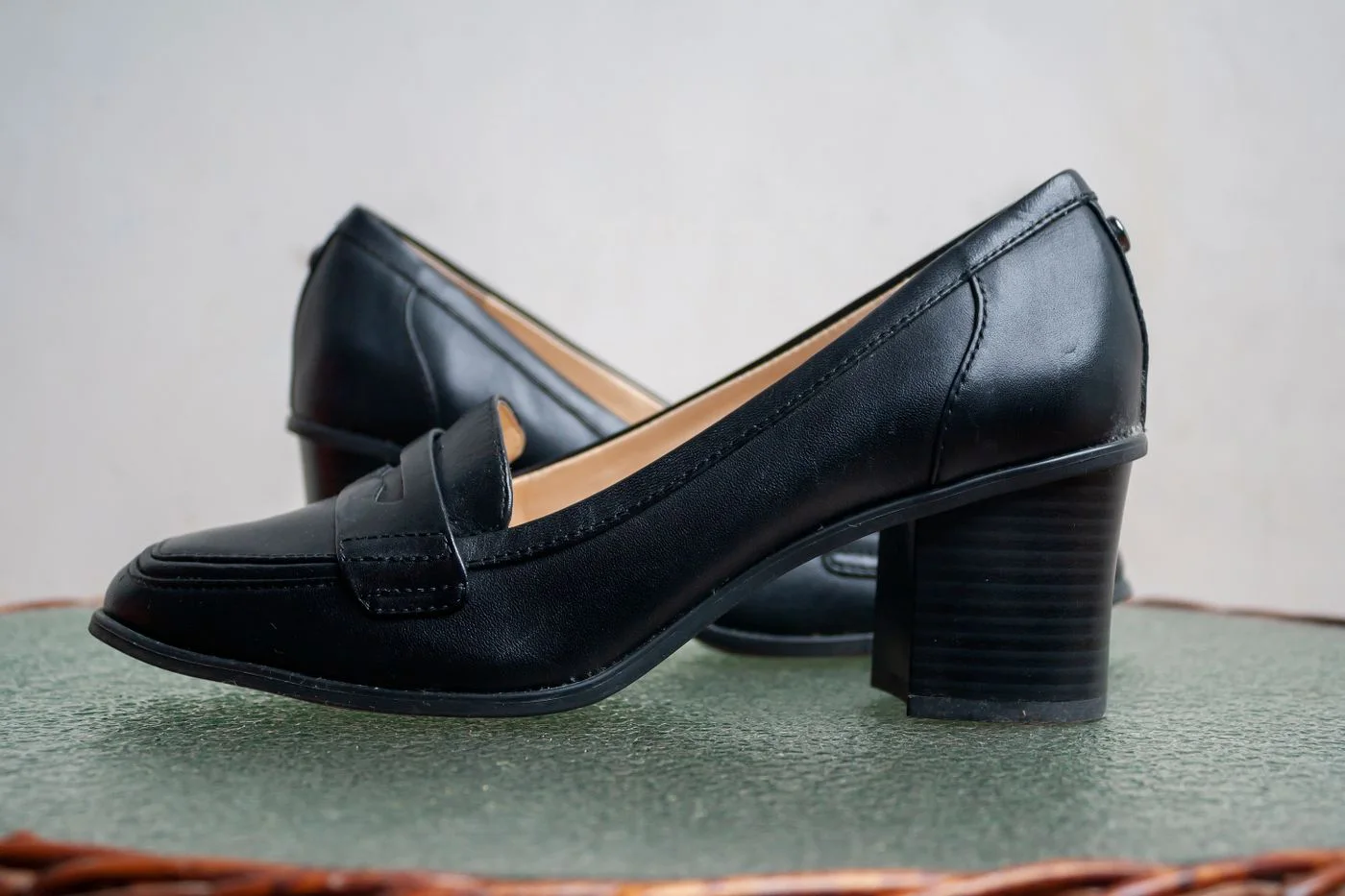
A slip-on shoe needs to suit the wearer through ordinary movement, including the way it sits around the heel. A familiar size label cannot settle that question on its own. Try the intended pair through the seller's permitted process and keep your own requirements central rather than accepting a fit that only works while standing still.
Begin with the intended socks or hosiery
Use the combination you actually expect to wear where trial conditions permit it. Different socks can affect the wearing arrangement, so avoid making a shoe feel acceptable with a pair you would never choose for the real outfit. The trial should provide information about ordinary use.
The petite midi dress and shoes guide helps connect footwear to the complete outfit. Appearance and hem relationships matter, but they should sit alongside personal comfort rather than replace it.
Observe the heel during a permitted trial
Follow the retailer's rules and the product's intended use when walking in a suitable trial area. Notice how the pair feels without forcing a particular stride or gripping to maintain the arrangement. Do not assume a shoe that feels unsuitable will become right simply because its material is expected to change.
If you need advice about a personal fit or health requirement, seek an appropriate professional rather than relying on a styling article. Different wearers have different needs. A description such as slip-on explains a broad design, not a guarantee about how the shoe will behave for every foot.
Check the whole shoe
Read the maker's information about construction, use and care. Heel feel is one part of the assessment alongside the opening, toe area and ordinary handling. Do not overlook another uncomfortable detail because one part of the shoe seems to hold well.
Avoid adding improvised modifications during an initial trial to make an uncertain pair work. Ask the seller about relevant questions and preserve the return option while deciding. A possible accessory should not become an unverified promise that every fit concern has a simple solution.
Include the actual day
Consider the route and activities for which the shoes are intended, using accurate product information rather than assumptions from their appearance. The petite capsule wardrobe guide helps identify the everyday use the pair needs to serve. A shoe chosen for an imaginary occasion may remain unused even when its colour coordinates with many clothes.
Keep receipts and required packaging until the decision is settled under the seller's actual terms. If this pair is not suitable, record what you noticed so the next comparison is more focused. Choosing another model or declining the purchase can be a useful result. The aim is footwear you can wear comfortably within your requirements, including a heel arrangement that does not demand constant attention.