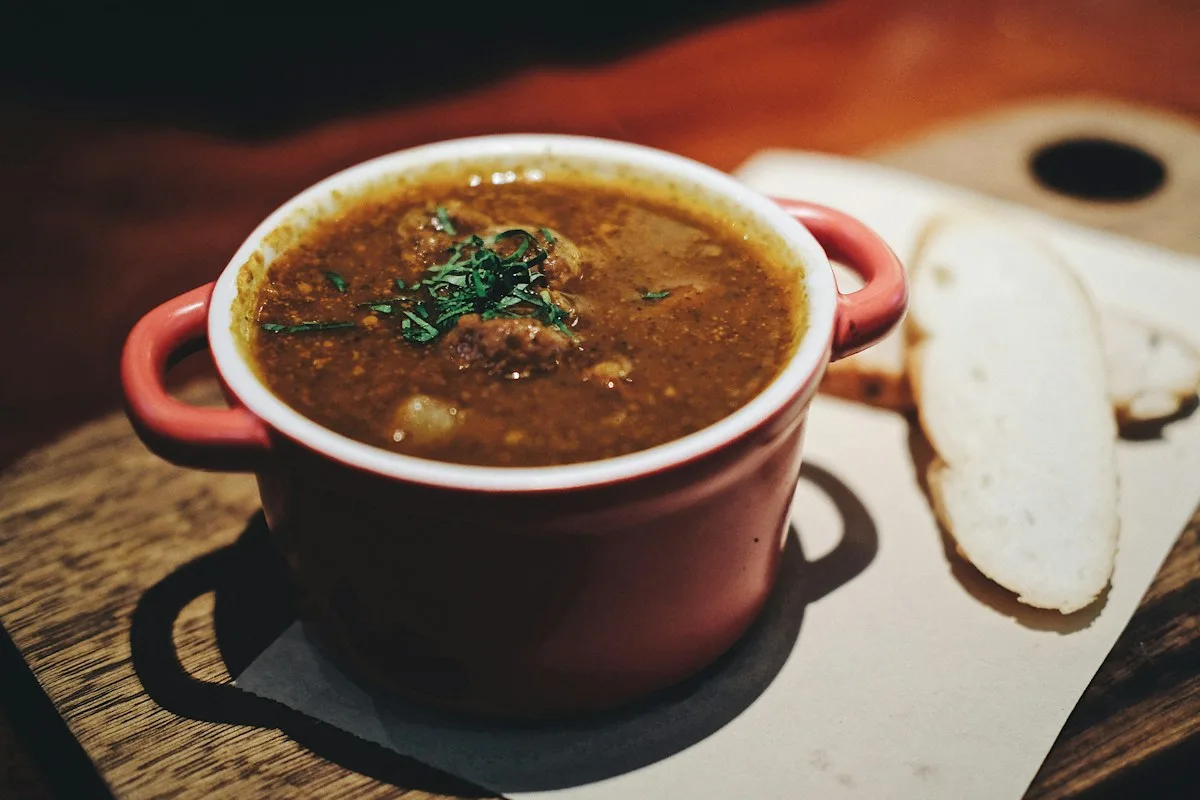
A soup meal offered to someone else needs an accurate ingredient note and an agreed handover. A warm-looking bowl in a photograph does not explain whether the food suits the recipient or how it should be handled. Discuss the practical details before making the dish so the gift answers a real need.
Confirm that a meal is wanted
Ask whether the recipient would welcome soup and what requirements matter to them. Give them room to decline or suggest another arrangement. A food gift should not create an obligation to accept a dish whose ingredients or preparation conditions they cannot assess comfortably.
The thoughtful everyday gift guide offers a related approach to useful presents. With food, attention to the recipient means checking suitability rather than describing a dish as comforting and assuming that settles the decision.
Record the actual ingredients
Keep the recipe and relevant packaging information available. The note should reflect what was actually used, including additions or substitutions, instead of copying an original list after changing the preparation. Do not make an assurance about a dietary requirement unless the ingredients and preparation conditions support it.
If a product's identity is uncertain, resolve that question before presenting the meal as suitable. A description such as vegetable soup does not establish every ingredient in a stock, seasoning or garnish. Accurate information lets the recipient make their own informed choice.
Agree on handling and timing
Follow appropriate authoritative food-safety guidance, the recipe and relevant product information for preparation, transport and storage. Do not invent a universal timetable for every soup. The actual ingredients and circumstances matter, and a friendly handover is not a substitute for a suitable plan.
Confirm when and where the meal will be received. If the plan changes, reassess the food's requirements rather than leaving it unattended somewhere convenient. Avoid surprising the recipient with a delivery that assumes immediate access to suitable storage or an available person to collect it.
Make the container arrangement clear
Use suitable food equipment according to its instructions and explain whether any vessel needs to be returned. Keep the ingredient note connected to the correct dish without covering essential product information. If bread or another accompaniment is included, preserve its relevant information as well.
Make the note legible and easy to keep with the food. A message hidden in a separate conversation may be harder to consult at the moment the recipient needs to identify an ingredient or check the agreed arrangement.
The weekday lunch bag guide helps consider the meal beyond its presentation. A recipient should understand what they have received and the appropriate next steps. After the handover, resolve any agreed container return without making the gift feel like another task. The useful result is a wanted meal with accurate information and a practical arrangement, leaving the recipient free to decide how it fits their own day.
Reference: FDA: Safe Food Handling.