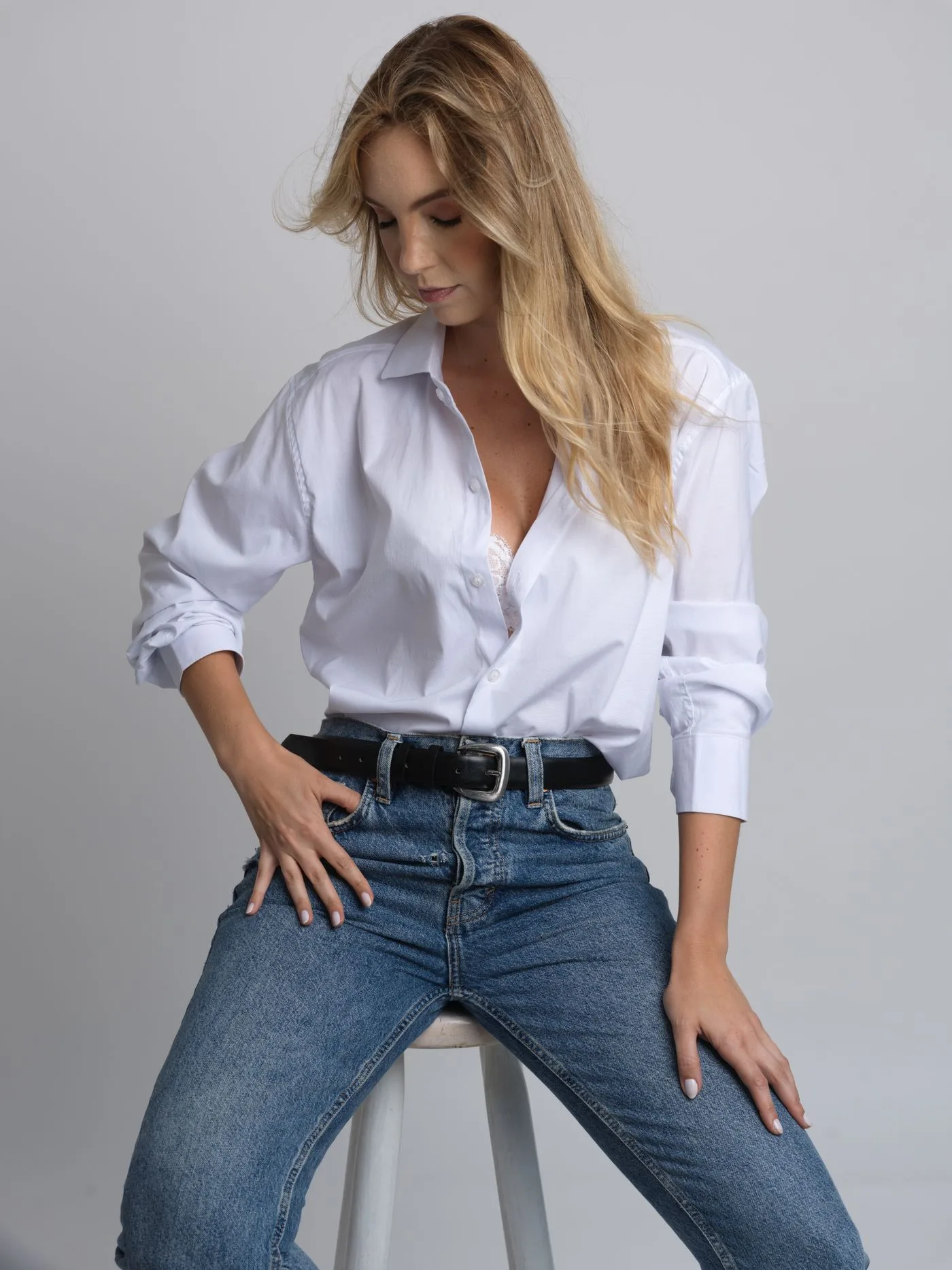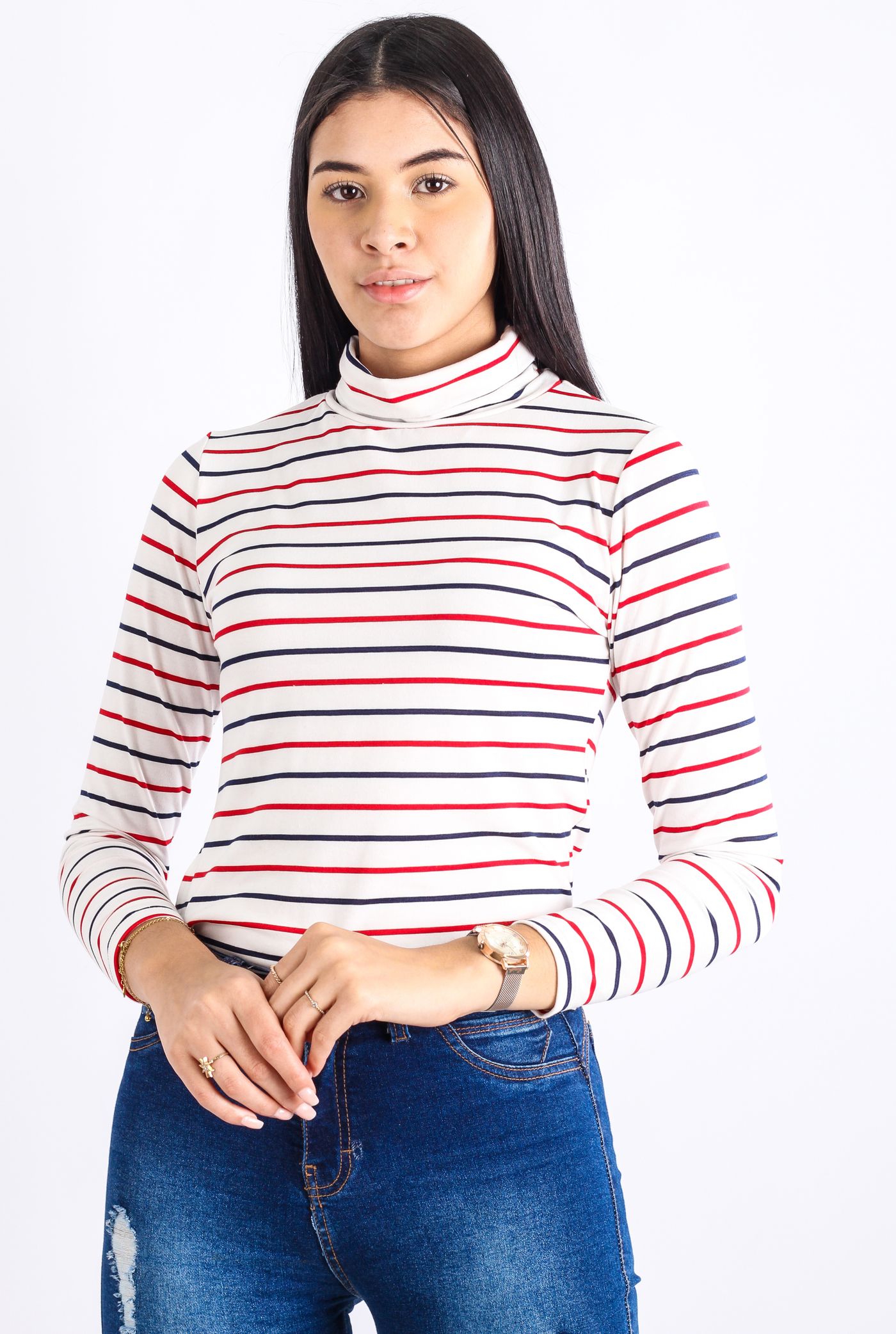
The edges of a striped top help determine how it works in an everyday outfit. Its neckline, sleeves and hem meet other garments at specific points, and those relationships matter alongside the pattern. Check the complete piece through familiar clothes rather than choosing it only because the stripes look appealing on the rack.
Begin with the hem relationship
Try the top with the trousers or skirt you intend to wear. Notice where the hem sits when standing and how much fabric gathers around the waistband. Choose the arrangement you find comfortable within the garment's design rather than forcing a tuck or fold to achieve a supposed proportion rule.
The petite denim guide provides related questions about the lower piece. A striped top's apparent length can feel different beside another rise, so compare a familiar existing companion before deciding the shirt itself needs changing.
Look at the sleeves through actual tasks
Check the sleeve ends when reaching, carrying a bag or sitting at a desk as appropriate to the planned day. The stripe pattern can draw attention to the cuff, but appearance does not settle whether that cuff is practical. Avoid repeatedly rolling or pulling it into a position that feels unsuitable.
Read the product information before making assumptions about stretch, care or permanent alterations. If the sleeve length is a concern, ask an appropriate professional about realistic options rather than promising yourself that a quick adjustment will preserve the garment's construction and pattern alignment.
Check the neckline with the intended layer
Add a cardigan or jacket you already wear and see how the striped neckline appears through its opening. Notice whether the layers rest comfortably together. A visible edge can be part of the outfit without needing to match the width or direction of another detail exactly.
The petite knitwear length guide helps assess a knitted companion's own dimensions. Keep both garments' practical fit in view instead of choosing one solely because it frames a small section of stripe attractively.
Review the complete outfit in movement
Sit and walk in a suitable place, then check whether the top settles back into a position you like. Ordinary folds are part of wearing clothes; the useful question is whether you remain comfortable and can manage your actual activities without constant rearranging.
If something feels wrong, name the edge or relationship that caused the concern. A neckline that catches beneath a layer needs a different response from a hem that competes with a waistband. That specific observation makes comparison more useful than declaring that stripes do or do not suit a petite frame. Keep a successful combination in your outfit notes so the top can become an easy repeated choice rather than a fresh styling puzzle each morning.