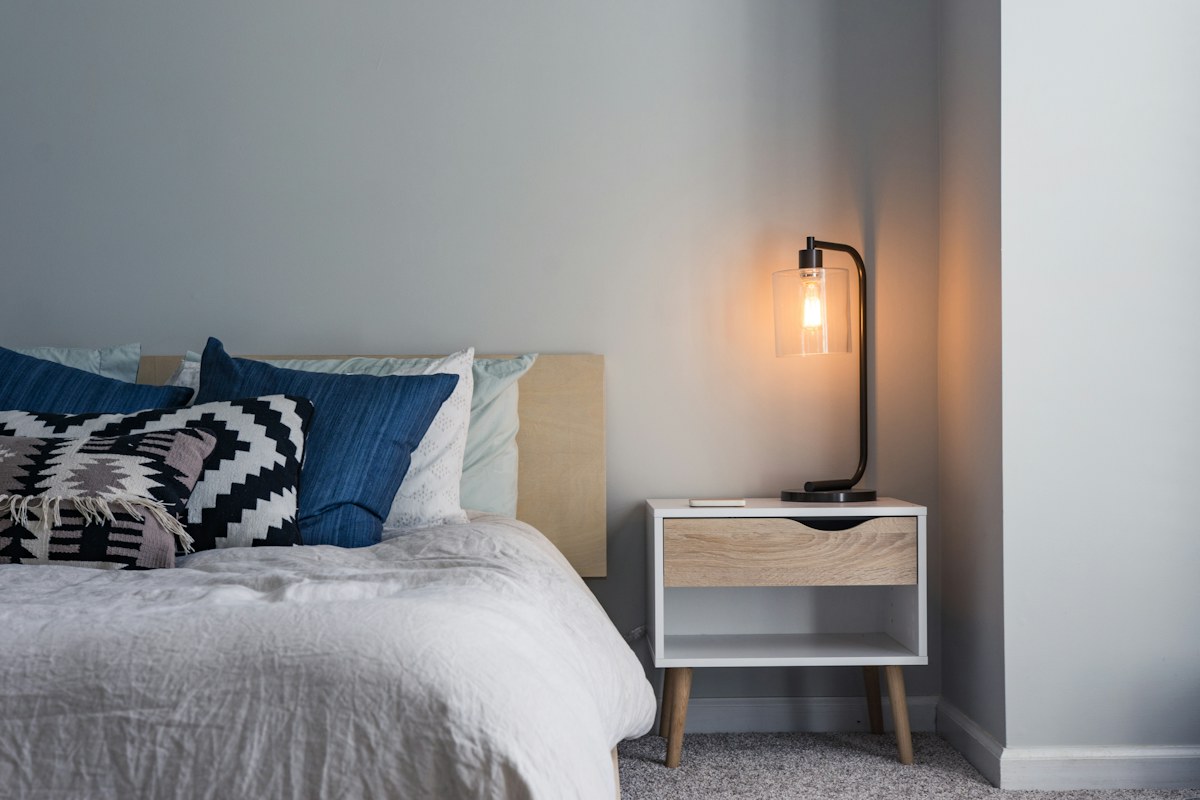
A bedside lamp's switch deserves attention before its shade or colour becomes the deciding feature. The control needs to work for the person using the bed and within the room's actual arrangement. Begin with that ordinary action, then compare suitable lamps through their product information and the available space.
Describe the user's requirements
Ask which control arrangement the person finds manageable and where they need to use it from. Do not assume a small switch or a particular mechanism is easy for everyone. If the room is for guests, consider how clearly a visitor can identify the lamp's intended operation without guessing.
The guest bedroom guide helps place the control within a real visit. A bedside arrangement should support ordinary needs rather than expect a guest to move furniture or search behind belongings to turn off a light.
Check the furniture relationship
Compare the lamp's actual dimensions with a suitable supporting surface. Keep the base appropriately placed and follow relevant product requirements. Do not balance the lamp near an edge or use an unstable support to bring a preferred design closer to the user's hand.
The nightstand guide offers useful questions about the other objects needed beside the bed. Make room for those necessities alongside the lamp so the control remains available after a book, glasses or another everyday item is set down.
Follow the product instructions
Read the lamp's guidance about its power supply, compatible light source, controls and clearances. Do not alter cables or fittings to solve a position problem. Ask an appropriate qualified person about unresolved electrical questions rather than treating them as part of a decorating experiment.
Plan a suitable cable route that keeps ordinary movement and exits clear. Check the room's actual outlets and relevant equipment guidance before buying. A cable that reaches the intended spot does not by itself establish that the complete arrangement is appropriate.
Assess an ordinary switch action
Where a safe and permitted trial is possible, let the intended user assess the control from their usual position. Include anyone else who regularly uses the bed, since one person's comfortable reach does not establish another's. Keep the trial focused on normal use rather than a carefully stretched posture.
For a guest room, include accurate operation information in whatever simple welcome arrangement the household uses. Avoid covering the lamp or attaching an improvised instruction to its fittings; the explanation should remain clear without changing the product's intended use.
If the arrangement proves awkward, name the specific difficulty before replacing the lamp. The control type, furniture height, product dimensions or another practical requirement may be responsible. Compare a relevant alternative using that information. A successful bedside light is one the intended person can operate comfortably within a suitable arrangement, with the lamp's requirements understood and the surrounding nightstand still useful for an ordinary evening.