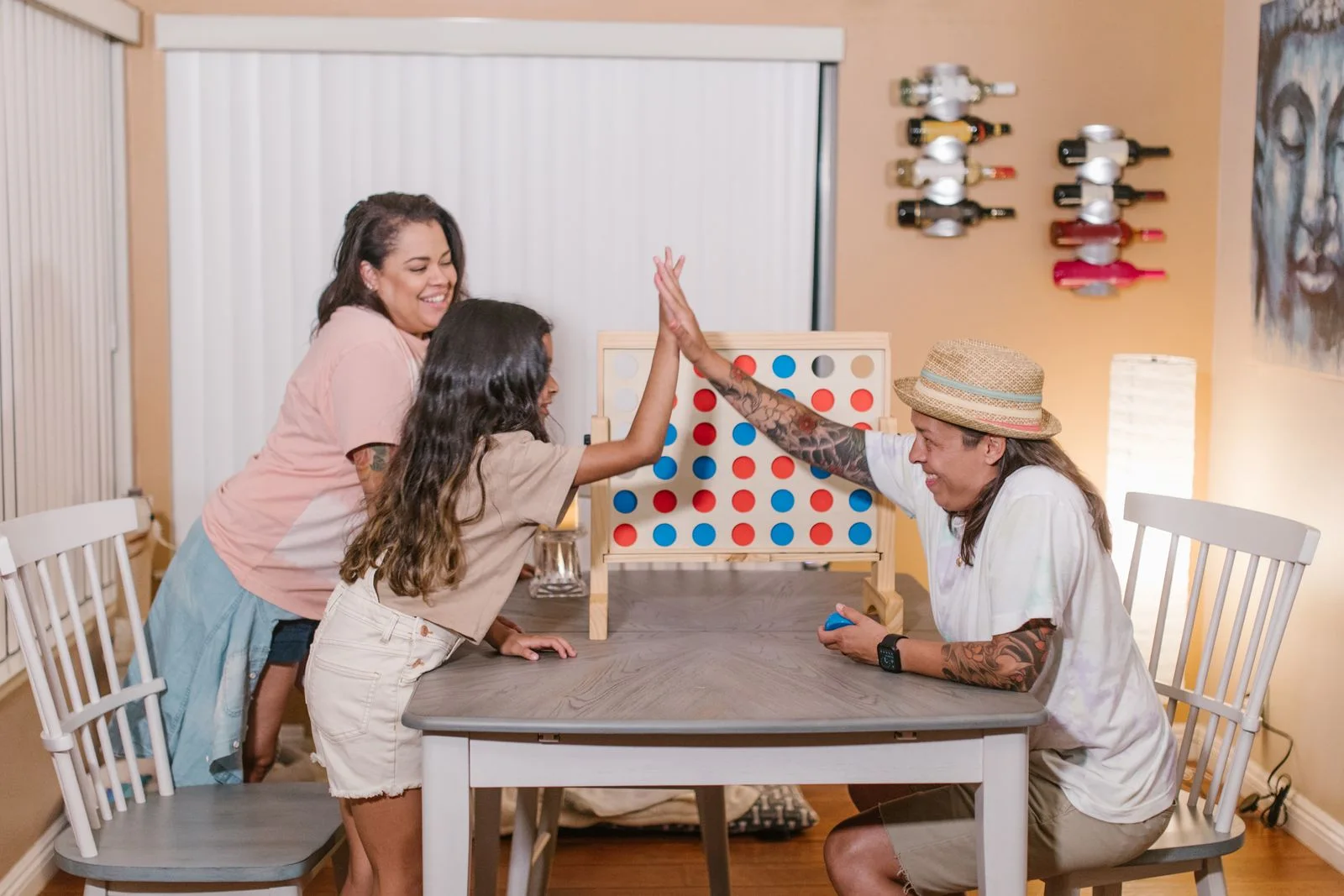
Explaining a board game for the first time is easier when the group knows what kind of evening they are agreeing to. A game that looks familiar may still use different rules or require a different commitment. Begin with the actual edition and the people present rather than assuming enthusiasm will make every unclear instruction disappear.
Check the group before opening everything
Ask whether people want to play and what sort of activity would suit them. Consider the product's stated player information and any relevant age guidance. Leave room for someone to decline or participate differently without making them responsible for the whole gathering's success.
The small gathering living-room guide helps consider the occupied room. Choose a suitable playing place with practical seating and clear routes, rather than squeezing the game onto the only surface left after decorative items are arranged.
Read the correct rules
Keep the instructions for the actual edition available. Do not rely entirely on memory from another version or a similarly named game. Check the setup, ordinary turn and ending so that the initial explanation does not accidentally omit the part needed to understand the game's purpose.
If something is unclear, consult the maker's relevant guidance where available. Avoid presenting a guessed rule as official. The group can agree on an informal adjustment if everyone wants to, but distinguish that agreement from the instructions supplied with the product.
Explain the useful sequence
Start with the aim, then show the components and what happens on a normal turn. Introduce details in a way the group can follow without rushing. A brief permitted example can be more understandable than reading every sentence aloud before anyone has seen the relevant pieces.
Check whether participants have questions and allow them to refer to the rules during play. Do not make remembering the whole explanation a test of attention. Keep the atmosphere comfortable enough that someone can say they have lost track without feeling they are delaying the evening.
Plan breaks and the finish
Agree how the group will handle a pause or a change of plans. The easy weekend hosting guide helps connect the activity to food, drinks and other parts of the occasion. Keep refreshments appropriately placed so they do not interfere with the product's care requirements or the space needed to play.
At the end, follow the game's packing and care information and check for small components in a suitable way. If it was borrowed, respect the owner's return arrangement. Note any specific explanation that confused the group so a future introduction can be clearer. A good first explanation gives people enough shared understanding to enjoy the activity, including the freedom to choose a different game or stop when the gathering needs something else.