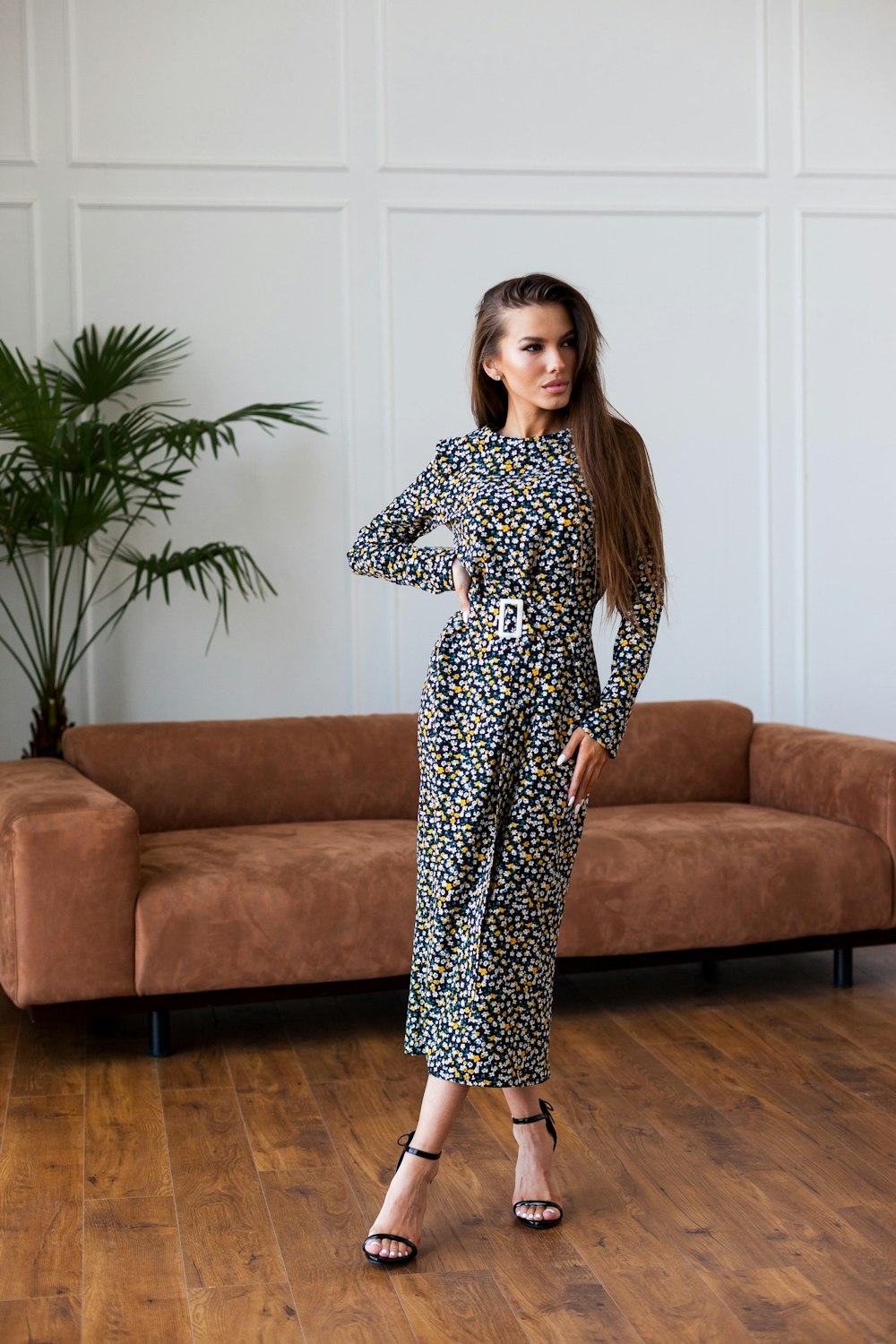
A pattern running through a full-length garment can read as separate motifs close up and as a broader texture from farther away. Compare those views before deciding how you want to wear it. The useful question is whether you enjoy the actual visual rhythm, not whether a print rule assigns the garment to your height or body. A long patterned piece can be considered through its own details and your ordinary day.
Look at the main pattern relationship
Notice the size of the repeated marks, the background between them and any colour that appears only in small areas. A dense arrangement can have a different presence from widely spaced motifs even when the colours are similar. Describe what you see before adding accessories intended to make the garment work.
Use the actual piece where possible. A close product image may make the motif clear without showing how it repeats across the whole garment. If that distinction matters, seek an appropriate wider view or reliable product information rather than assuming every example looks identical.
Compare close and ordinary-distance views
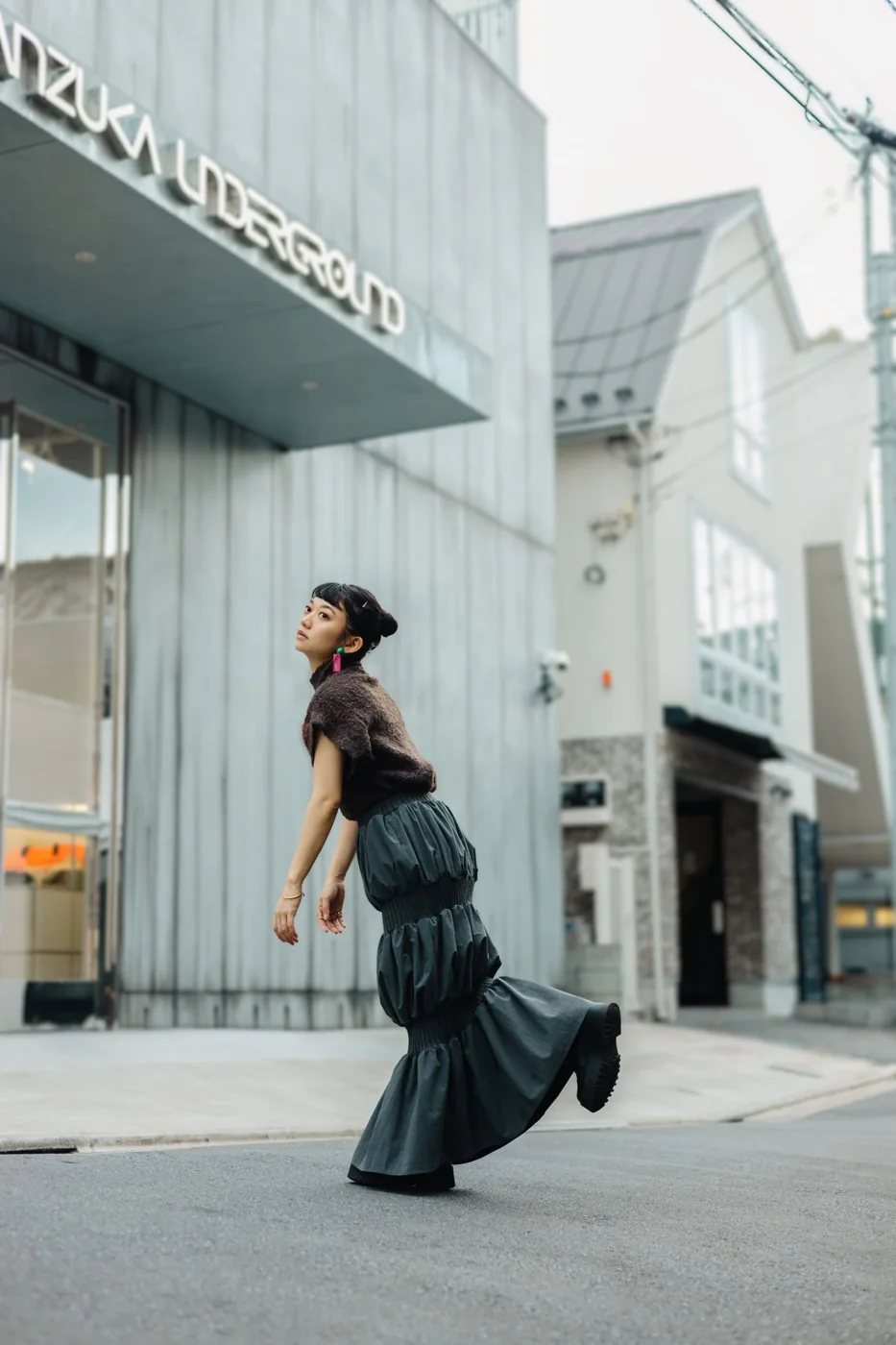
Stand at a comfortable mirror distance and look at the whole outline. Then look more closely at the details that interest you. Does a small colour remain noticeable, or does the print begin to read as one overall tone? Neither result is automatically better.
Keep the garment's fit and movement as separate questions. A pattern you enjoy does not establish a comfortable waist, a manageable hem or appropriate care. The skirt length and day guide helps connect a long outline with the actual activities you intend.
Add the layer you will genuinely use
Try the jacket or cardigan that belongs to the plan. Notice which strip or section of the pattern remains visible through its opening. A layered view can be appealing even when it hides much of the garment, but it should be a choice you understand rather than a way to avoid a print you dislike.
Check the version with the layer removed as well. An ordinary outing can include both. You do not need one fixed formula for every moment, only a clear sense of whether the actual combinations suit your preferences.
Keep the supporting group modest
Try the intended shoes and bag before adding another colour or motif. An existing quiet piece may let the pattern remain clear, while a deliberate contrast may be what you enjoy. There is no need to match every small mark elsewhere in the outfit.
The petite capsule guide keeps the supporting clothes connected to your actual week. A patterned garment can have one useful role without requiring a new wardrobe around it.
Finish with a plain preference: you like the overall texture, the separate motifs or the contrast with a particular layer. Keep a small private reference if useful and identify the actual pieces. The comparison has worked when it makes the garment more understandable to wear, leaving your body out of an invented rule about which pattern sizes it is allowed to carry.