A two-colour outfit can already have a clear relationship before a third accent is added. Try the actual layers, lower half and shoes together and notice what the pair is doing. You may enjoy a bright area beside a quieter colour or two equally noticeable elements. The aim is to understand the existing group, not to complete a formula that says every outfit needs another small contrasting object.
Identify the two colours you actually see
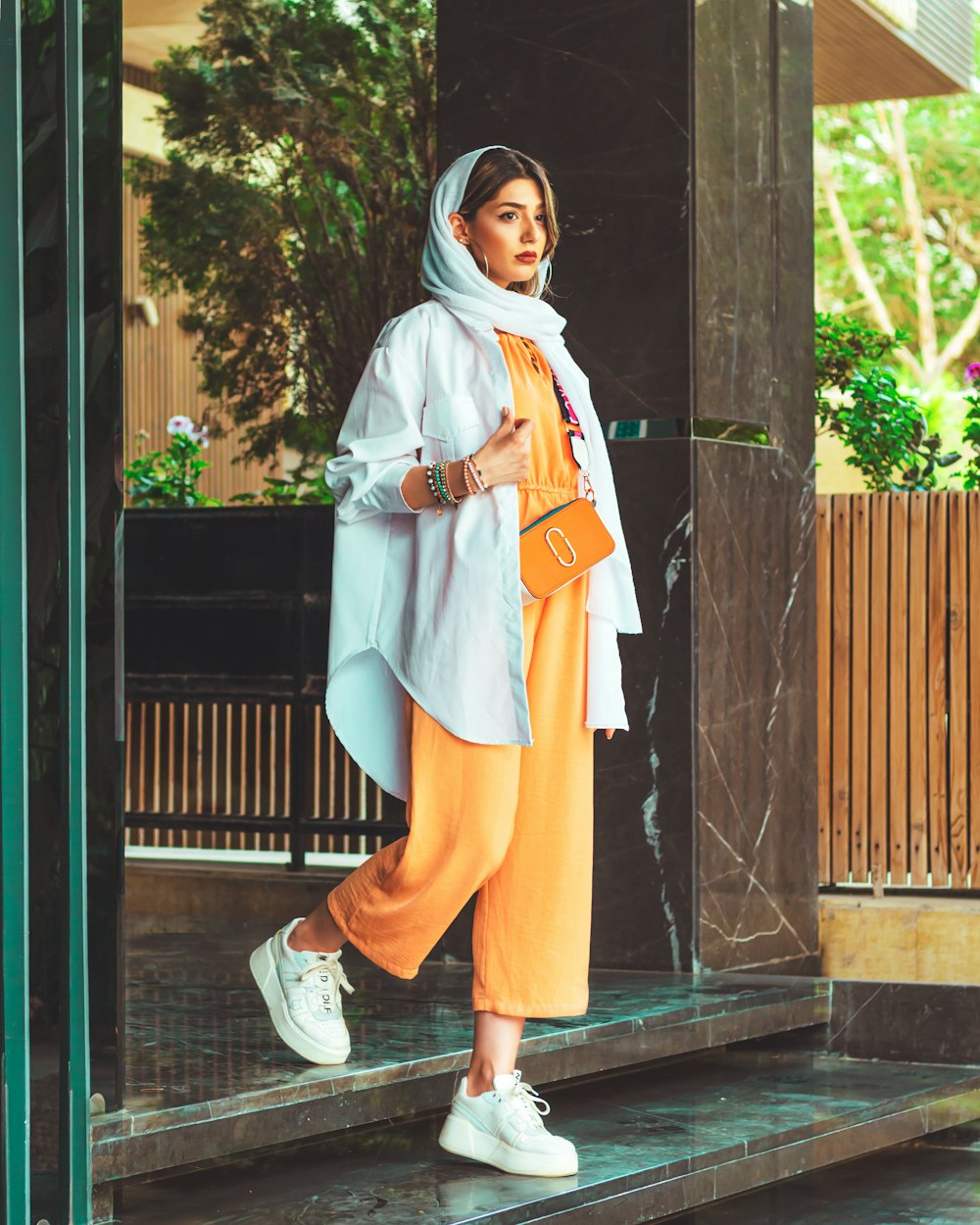
Look at the main visible areas rather than naming every small detail. A pale outer layer over a brighter outfit may create the pair, while the shoes remain a quiet practical part of the group. The broad relationship can matter more than an exact match between individual materials.
Keep the actual garments in view. Colour names on a listing and screen images are not precise substitutes for seeing the pieces together. If you are considering a purchase, use appropriate product information and leave an important colour question open rather than assuming a familiar label settles it.
Compare the proportions through ordinary use
Try the outer layer in the appropriate ways you intend to wear it. An open shirt or jacket reveals more of the colour beneath; a fastened view changes that balance. Notice which version you prefer without turning the amount of visible colour into a rule about your measurements.
The petite and regular pieces guide helps keep the whole outfit central when garments come from different size ranges. A colour relationship does not require all the pieces to share a label or a particular proportion formula.
Add existing shoes and a bag
Use the items that fit the actual day before searching for a decorative solution. A shoe may repeat a quiet colour, supply a small contrast or simply do its practical job. Look at the whole group from an ordinary distance rather than inspecting each accessory separately.
Ask what another accent would contribute. If it only repeats a colour you already see clearly, you may not want it. If it introduces a detail you enjoy, try it as a real option. Removing an accessory is as complete a styling decision as adding one.
Check the changed versions of the outfit
Consider the moment when the outer layer comes off, the bag is set aside or the shoes are partly hidden when seated. You do not need the same colour balance in every position, but the versions should remain ones you understand and want to wear.
The city-weekend capsule guide connects these small choices with a limited travel group. An outfit can offer variety through ordinary layer changes without requiring another colour or garment in the case.
Keep a short reference to the combination if it is useful, naming the actual pieces rather than only the two colours. The result can remain simple. A clear pair has done enough when it gives the outfit a relationship you enjoy and leaves the rest of the day free from the feeling that one more accessory is still missing.