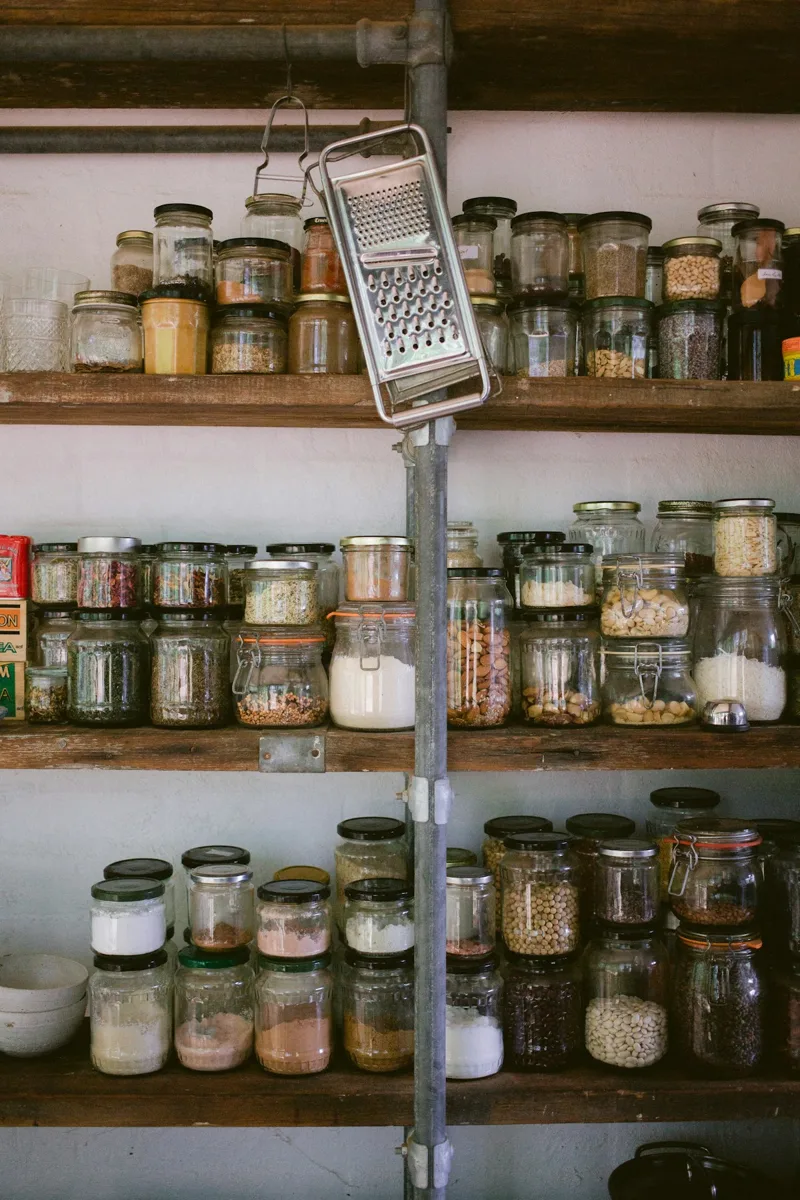
Pantry organising should preserve the information that belongs with the food. A row of matching jars can become less useful if original dates, ingredients or instructions disappear during decanting. Begin with the actual products and their requirements before deciding whether another container improves the cupboard.
Read before transferring
Check the original packaging for storage instructions, ingredient information and relevant date wording. Do not assume that every dry-looking ingredient has the same requirements or that a different container will extend its suitability. Keep the product's own guidance central to any organising decision.
If a transfer is appropriate, use a suitable food-storage container according to its instructions. Avoid treating a decorative jar as food equipment without reliable information about its intended use. The arrangement should support appropriate storage rather than merely create a coordinated appearance.
Keep the correct information connected
Preserve the product's identity and essential instructions in a way that remains clearly linked to the correct contents. A general label such as baking supplies does not replace an ingredient name or its original information. Do not combine products from different packages in a way that makes their details impossible to distinguish.
The weekday lunch bag guide offers a related reminder that everyday food routines depend on useful information. A clearly organised cupboard should help someone identify what they are using rather than require them to guess from texture or colour.
Leave date wording accurate
Copy or retain relevant information faithfully instead of inventing a new date based on the day you organised the cupboard. Different date terms and products can require different interpretation. Where a question matters, use appropriate official guidance for your location and the actual food rather than relying on a decorative pantry label.
Keep any instruction about opening, preparation or subsequent storage with the product. A neat container does not establish that its contents remain suitable. Do not offer a certainty about an unfamiliar ingredient simply because it has been stored in the same way as a familiar one.
Make shared use understandable
Ask whether other household members can identify the food and find its information. Choose a readable format and suitable label method that respects the container's care requirements. Avoid covering essential markings or adding a label that becomes illegible during ordinary handling.
The easy weekend hosting guide helps connect pantry readiness to an actual meal. Before using an ingredient, consult its current condition and relevant guidance rather than assuming a previously organised shelf has settled the decision forever. If the information has become unclear, pause and resolve that uncertainty appropriately. The goal is a cupboard that remains useful and understandable, with attractive storage serving the food's requirements rather than replacing them.
Review the label after ordinary use to check that it still identifies the correct contents. A container reused for another product needs an appropriately updated record rather than an old date or name left in place.
Reference: FDA: Safe Food Handling.