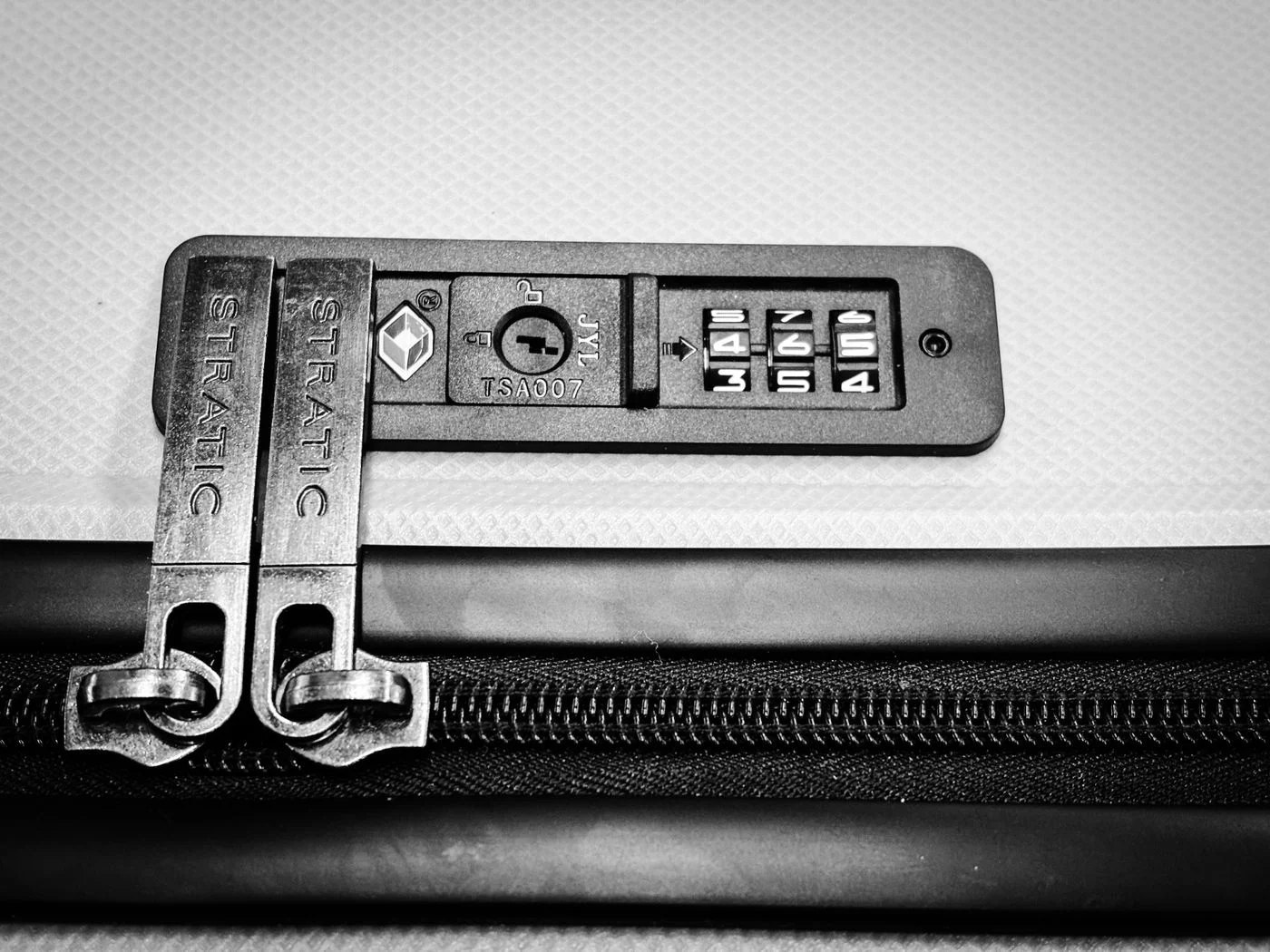
A suitcase zipper works best when its path is understood before the case is packed to its limit. The fastening, lining and nearby contents all form part of the closing process. Give the zipper a clear route and follow the actual product instructions rather than using force to make an unsuitable load disappear inside.
Review the empty case
Look at the zipper's intended path and any internal pieces that sit close to it. Consult the maker's information about operation and care. Do not assume every closure uses the same technique or that an unfamiliar fitting is meant to be pulled into place without guidance.
The compact luggage guide helps assess the case as a complete product. A suitable fastening is one part of the choice alongside usable space and handling, not a guarantee that every item on a packing list will fit.
Keep contents within suitable limits
Pack according to the case's stated requirements and the actual journey's needs. Check for fabric, straps or other objects near the zipper before closing. Avoid relying on another person to press the case together while you pull an uncertain fastening harder.
The city weekend capsule guide offers useful questions about reducing a real packing load. Removing an unnecessary item can be more practical than treating the zipper as a tool for compressing an arrangement the case was not designed to hold.
Stop when the path is obstructed
If the zipper catches, stop and identify what is happening without forcing the mechanism. Follow the maker's troubleshooting guidance or seek appropriate service advice. Do not apply an improvised lubricant or tool because it worked on an unrelated bag; materials and construction can differ.
An apparent obstruction may involve the lining, contents or a damaged component. Keep those possibilities distinct rather than assuming every difficult closure means the case is overfilled. An accurate description will help a seller or repair professional understand the problem if further assistance is needed.
Check the completed closing arrangement
Use any locks or additional fittings only according to their actual instructions. A closed zipper should not be described as a universal security guarantee, and a locking mechanism has its own requirements. Keep relevant operation information accessible without sharing private codes or details unnecessarily.
Keep the case's actual product reference with your travel equipment records where useful. Identifying the correct model can make a repair or replacement-parts question more focused than asking for advice about a generic suitcase fastening.
Before a journey, review an existing case in time to address a genuine issue rather than discovering it during the final packing rush. If it needs repair, use appropriate advice and keep the travel plan realistic while the question remains open. A clear zipper path is a practical part of looking after luggage, supported by suitable packing and informed handling rather than a last-minute test of how much force the closure will tolerate.