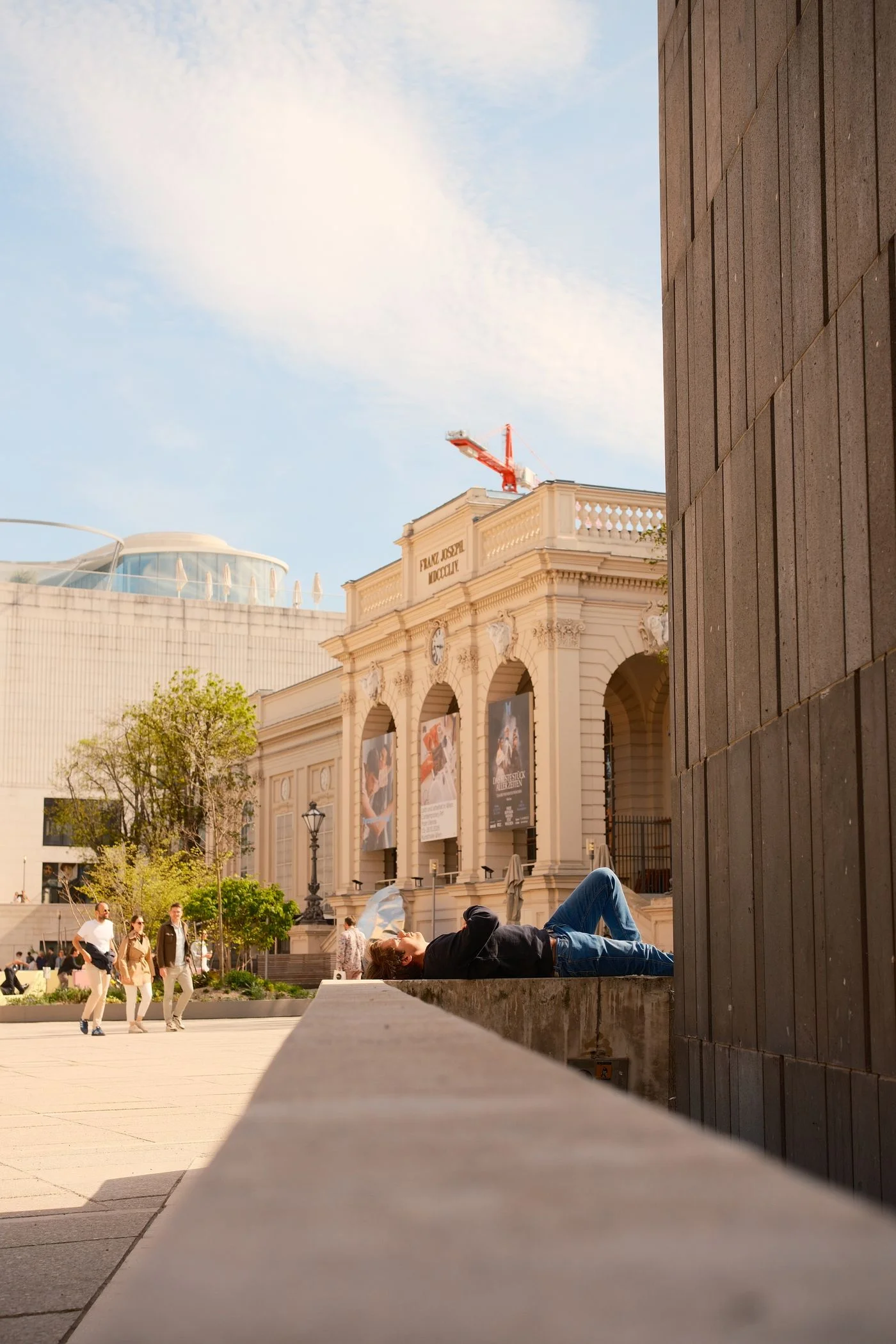
A building can be too large and complicated to draw comfortably during a city visit. Choose one visible detail instead: an arch, a window grouping or the space between columns. A small sketch can record how you looked at that feature without claiming to describe the whole structure. Work from an ordinary permitted public position and let the available view set the scale of the exercise.
Choose the position before the composition
Remain in areas you are entitled to use and follow local instructions. Keep entrances, circulation routes and working spaces clear. Do not step into traffic, enter private property or seek an awkward perch for the sake of a better angle. If the available position does not allow a pause, observe briefly and draw later from your own suitable reference.
Use a small notebook and materials you can manage without spreading out. You do not need a full painting setup to notice a building detail. The compact travel bag guide helps keep a small activity from becoming a collection of loose objects carried through the rest of the day.
Give the detail a boundary
Draw a small rectangle on the page and choose what belongs inside it. For an arch, you might include the opening and enough wall around it to explain its shape. For a window group, decide whether you are drawing the rhythm of several windows or the construction of one. Those are different subjects, and either can be enough.
Leave unrelated parts of the building outside the frame. A detail sketch does not need a roof, street and distant skyline to become legitimate. Limiting the view makes it easier to compare the relationships you actually chose.
Compare broad relationships first
Notice the width of an opening relative to its height, the distance between repeated elements and the areas of shadow. Mark those broad relationships lightly before adding ornament. The empty space beneath an arch may explain the structure more clearly than a hurried collection of decorative lines.
Use your seated or standing view consistently rather than trying to correct every line into an imagined front-facing plan. You are drawing how the detail appears from a particular place. This is an observational sketch, not a measured architectural record or a claim about the building's construction.
Add a factual location and a personal note
Write the building's name only when you can establish it reliably. A modest location description is better than a guessed identification. Keep any architectural history separate from your visual observations and consult an appropriate source before treating it as fact.
Add one sentence about what you noticed: the alternating light and dark openings, or the way an arch sat inside a larger rectangle. The finished-page review guide can help you leave the page understandable without continuing to add detail indefinitely.
Put the materials away and return to the visit. The sketch may remain incomplete and still preserve your attention to one feature. Its purpose was to make the building more specific to your experience, not to replace the experience with a drawing project.