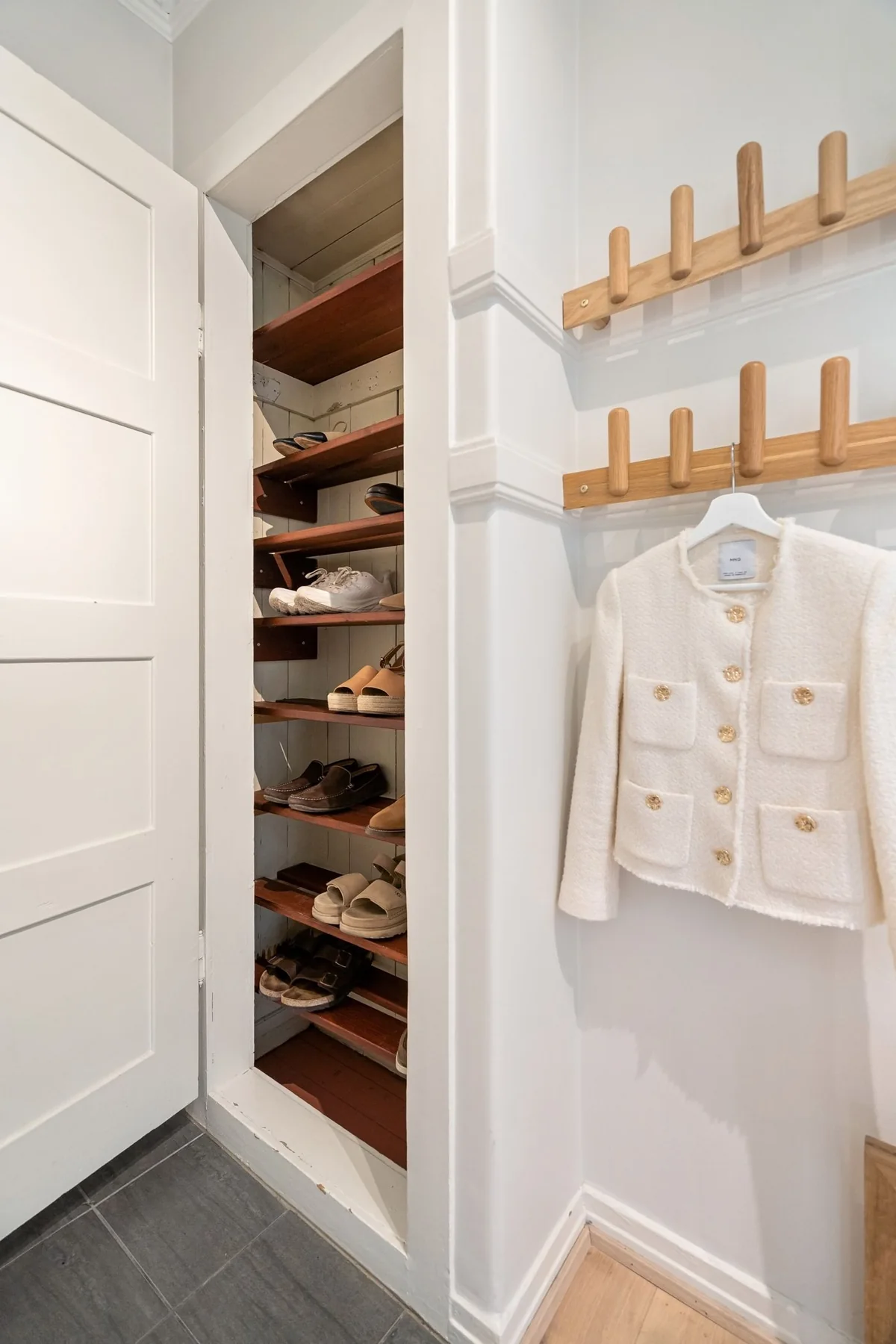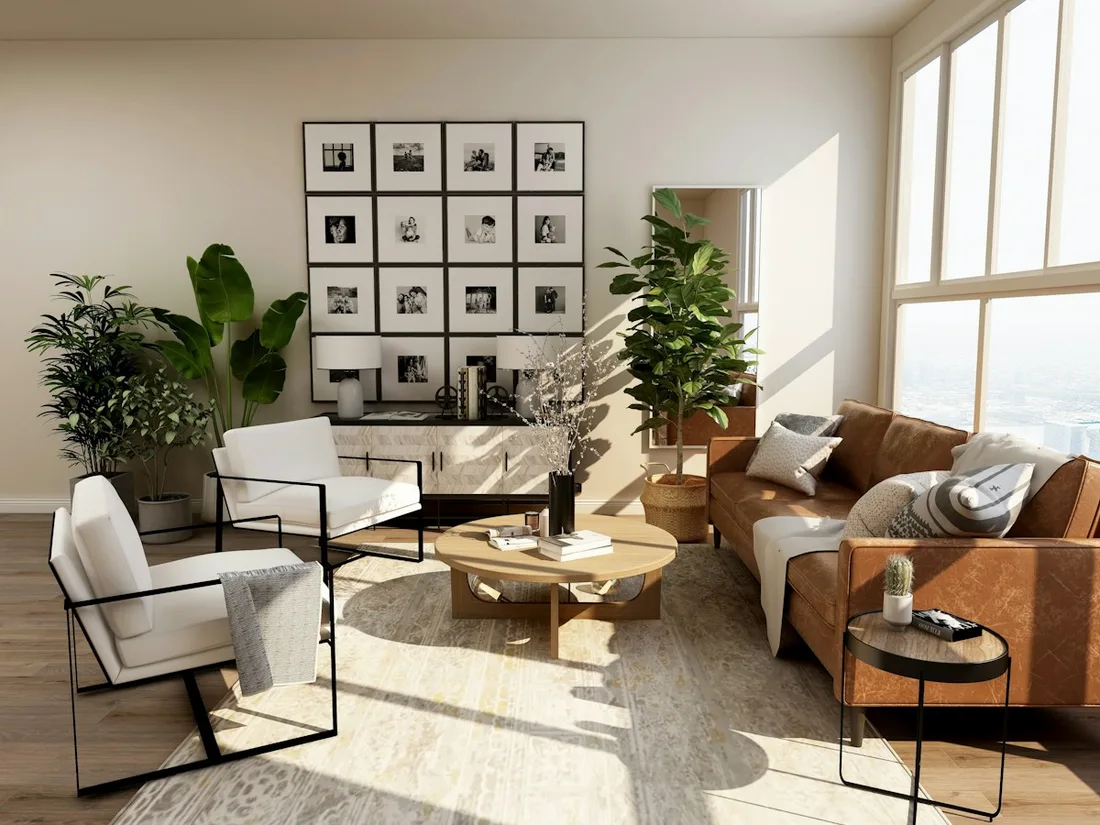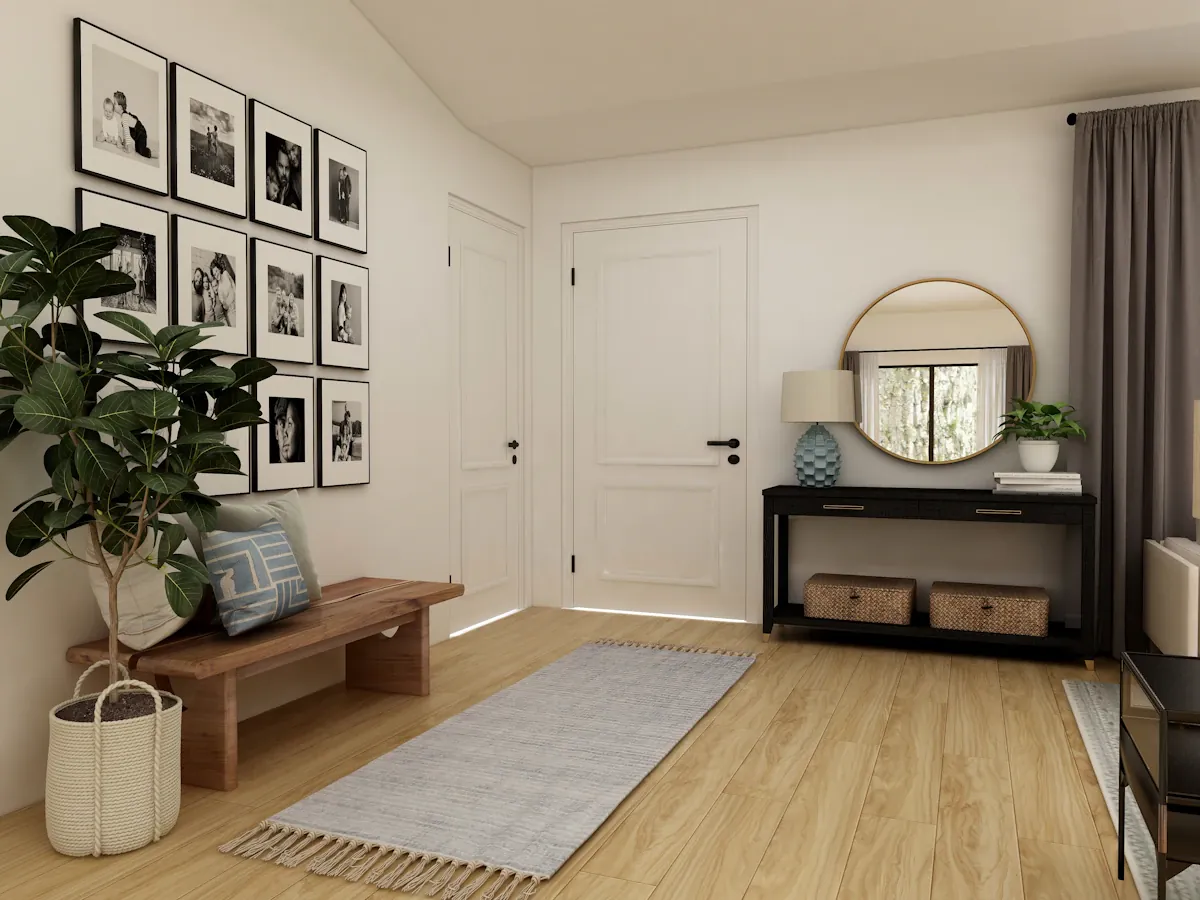
An entry mirror works better when bags do not occupy the place needed to use it. In a small entrance, the two functions can gradually compete: a convenient bag return becomes a pile that blocks a final outfit check or the door itself. Give each purpose a clear place based on the room's actual movement.
Observe the ordinary departure
Notice where someone stands to use the mirror and what they carry at that moment. Ask the household's users which position feels manageable rather than assigning one ideal viewing spot. Keep the review practical, including coats, bags and any other belongings normally handled before leaving.
The renter entryway guide offers a useful starting point for that occupied routine. An entrance should remain available for arrivals and departures, with routes and exits clear throughout the day.
Check the mirror's own requirements
Follow the mirror maker's installation and care information. Do not move or lean a mirror into an improvised position simply to create space beside a bag shelf. Obtain permission where fixtures are rented or shared, and seek appropriate help with an uncertain fitting.
A suitable viewing arrangement should not require the user to stand in a doorway's path or step around a pile of belongings. If the room cannot support the proposed position, consider another appropriate location rather than treating a styled entrance photograph as a layout to reproduce at any cost.
Give bags a separate return decision
Choose a suitable place for the actual bags the household uses. Consider the load, product guidance and the furniture or fitting that will support them. A hook that happens to accept a strap does not establish that the complete arrangement is appropriate.
The petite everyday bag guide helps connect the return place to a real item rather than an abstract idea of bag storage. A small pouch and a fully packed work bag can create different requirements even when both belong to the same person.
Recheck the shared space
Try the arrangement through normal arrival and departure movements without placing obstacles across the route. Include anyone else who regularly uses the entrance. One person's preferred mirror position may not suit another's requirements, so keep the decision open to actual household use.
Keep temporary shopping bags distinguishable from everyday bags returned for the next outing. Unpacking a new purchase can resolve a different issue from providing permanent storage, so avoid letting one unfinished task determine the entrance layout.
If bags repeatedly return to the mirror's approach, identify why the intended storage is inconvenient. It may be hard to reach, too crowded or unrelated to the normal arrival point. Address that specific obstacle before adding another container. The useful outcome is an entrance where the mirror can be used comfortably and bags have an appropriate return place, with neither function requiring a daily rearrangement of the doorway.