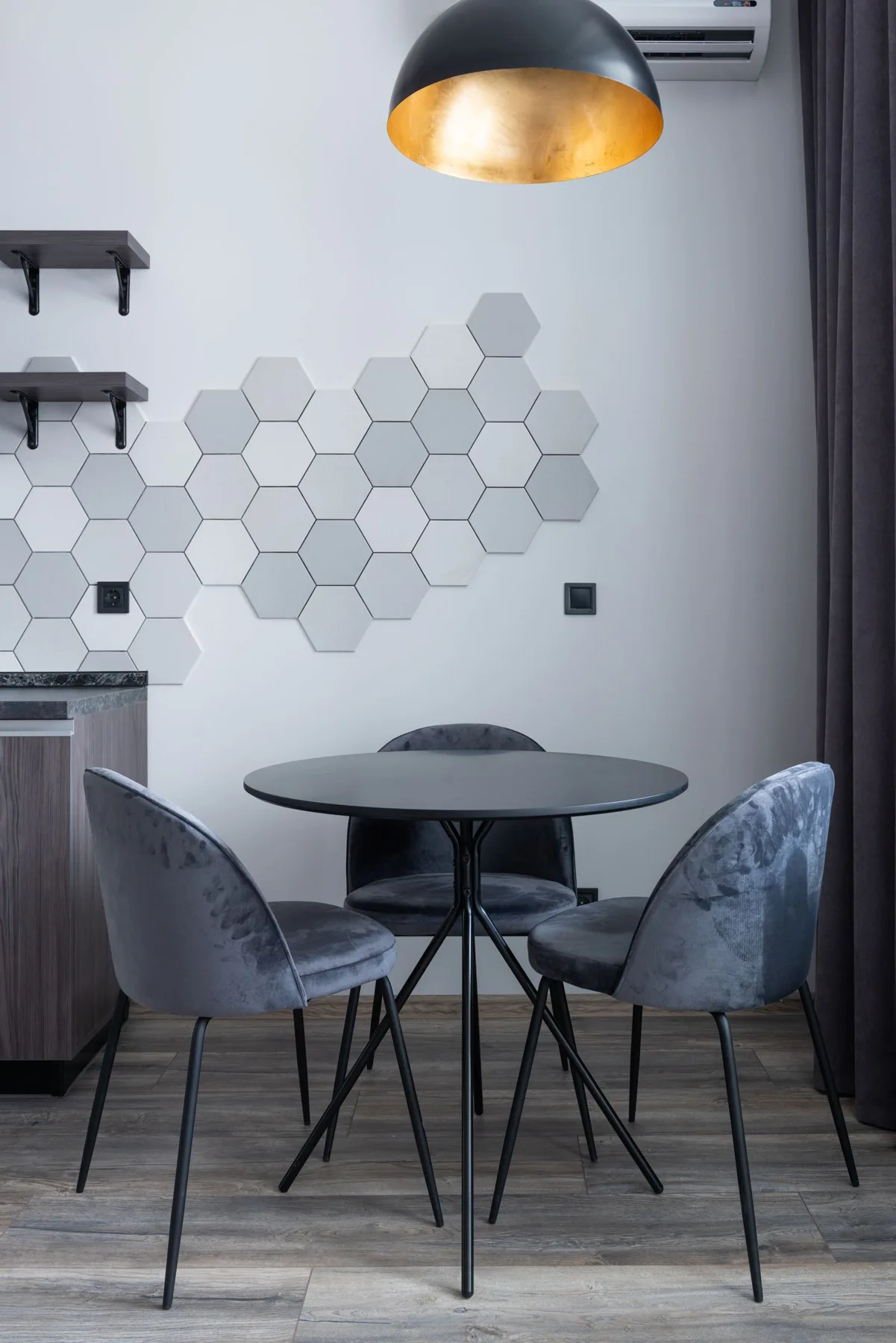
A round table needs to be checked through the approach to each chair, not only through the tabletop's diameter. The table base, neighbouring furniture and the room's routes can create different conditions around the same surface. Try the actual seating plan before assuming a circular shape makes every place equally easy to use.
Establish the ordinary number of places
Decide how many people will normally sit there and what the table is intended to support. Follow the product's stated requirements and leave individual comfort judgments with the users. Do not infer capacity solely from the number of chairs shown around a table in a photograph.
The easy weekend hosting guide helps connect the furniture to a real occasion. A table arrangement should support the gathering you are actually planning rather than an imagined maximum that leaves no room for ordinary movement.
Look below the tabletop
Check the base, legs and the chairs' actual dimensions. A chair may fit beneath part of the edge while meeting a support in another position. Consult the relevant product information instead of assuming a round top provides identical usable space all the way around.
Keep the table and chairs within their intended use. Do not change a furniture support or rely on an improvised adjustment to make a preferred combination fit. Ask the maker or appropriate seller about compatibility questions before buying or modifying anything.
Assess each approach separately
Consider the route to every planned seat, including the space needed to move the chair and stand again. A wall, door or other piece of furniture may affect one place more than another. Keep routes and exits clear, and use the actual users' requirements rather than a guessed universal clearance.
The small gathering living-room guide offers related questions about occupied furniture. Apply the same attention at the table: the room must work with people present, not only when all chairs are pushed neatly under the edge.
Include the objects used during the meal
Consider the suitable serving items and tableware needed for the ordinary plan. Follow the furniture's care information and avoid assuming a covering makes every hot or wet object appropriate for its surface. Keep the setting proportionate so people can use their places comfortably.
Check the arrangement when a place is temporarily unused as well. A spare chair still occupies space, and deciding where it belongs can prevent the ordinary table from becoming crowded between occasional larger gatherings.
If a trial reveals an awkward seat, identify whether the problem comes from the table base, chair dimensions, route or overall arrangement. That description makes comparison more focused than declaring that all round tables suit small rooms. Reposition existing furniture only where appropriate and check the result again. A useful round table arrangement supports each person's approach and seated use while preserving the room's other ordinary functions.